
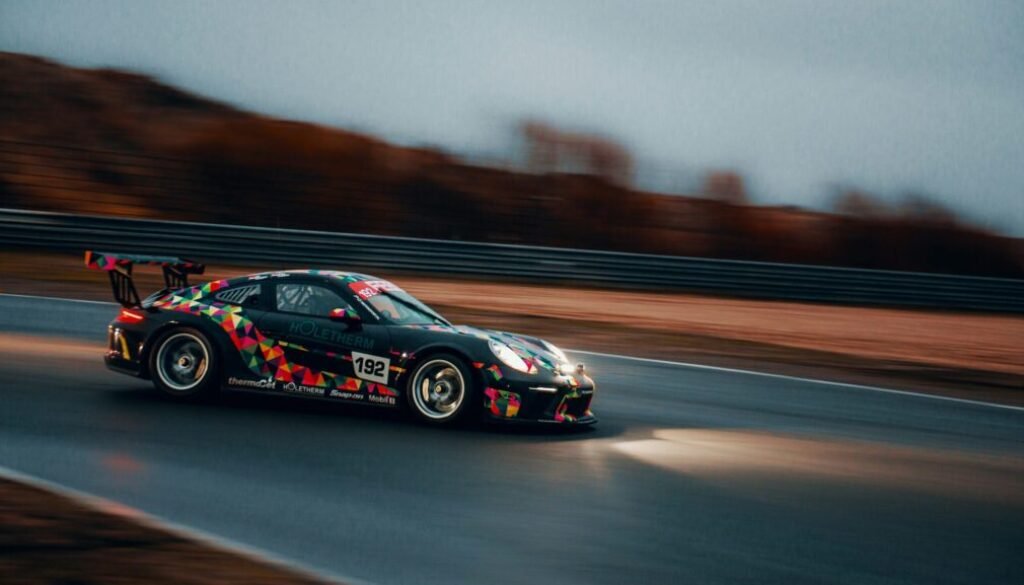
The Evolution of Car Racing: From the First Races to Modern Motorsport
Car racing has been one of the most exciting and enduring forms of motorsport, captivating audiences with speed, strategy, and innovation for over a century. What began as simple competitions between the earliest automobiles has evolved into a high-tech global industry with multiple disciplines, millions of fans, and cutting-edge technology. From its humble beginnings to the modern spectacle we see today, the history of car racing is a thrilling journey marked by breakthroughs, rivalries, and iconic moments. Let’s take a look at how car racing has evolved over the years.
The Birth of Car Racing: Late 19th Century
The origins of car racing date back to the late 19th century, when the first motorized vehicles were developed. The very first recorded motor race was the Paris-Rouen Race in 1894, a relatively short event of around 80 miles, which attracted great public interest. This race, while more of a reliability trial than a true race, set the stage for competitive motorsport.
A few years later, in 1900, the Paris-Bordeaux-Paris race was held, covering over 1,200 kilometers and cementing the concept of car racing as a legitimate sport. The early races were incredibly dangerous, with limited safety features, and only a small number of brave drivers participated. Despite this, the thrill of racing was irresistible, and the number of races began to multiply.
The Rise of Organized Racing: Early 20th Century
The 1900s saw the establishment of some of the most iconic car races, many of which continue to this day. One such event was the Indianapolis 500, which held its first race in 1911. The Indy 500 quickly became one of the most prestigious racing events in the world, attracting large crowds and showcasing the best in racing talent.
Similarly, the 24 Hours of Le Mans, first held in 1923, brought endurance racing to the forefront. This race tested the reliability, speed, and endurance of vehicles, pushing them to their limits as teams competed to cover the longest distance in 24 hours. These events played a pivotal role in shaping the structure of modern car racing.
The Birth of Formula One: Mid-20th Century
In the 1950s, car racing took a giant leap forward with the formation of the Formula One World Championship. F1, the pinnacle of open-wheel racing, was born in 1950, and its early years were dominated by European manufacturers like Ferrari, Alfa Romeo, and Maserati. The introduction of standardized rules and the rise of major race tracks like Monaco and Silverstone turned Formula One into the global spectacle it is today.
F1 racing revolutionized car technology, with advances in aerodynamics, engine design, and materials science pushing the boundaries of performance. The competition between drivers and teams became fierce, and iconic drivers like Juan Manuel Fangio, Stirling Moss, and later Jim Clark and Ayrton Senna cemented the sport’s place in history.
The 1970s-1990s: The Golden Age of Motorsport
The second half of the 20th century was the golden age for many forms of car racing. The introduction of NASCAR in the United States in the 1940s led to a dominant form of stock car racing that reached the peak of popularity in the 1970s and 1980s. The Daytona 500 became an iconic race, with figures like Richard Petty and Dale Earnhardt becoming household names. NASCAR’s focus on speed, strategy, and close racing made it one of the most beloved forms of American motorsport.
Meanwhile, in the world of rally racing, the World Rally Championship (WRC) grew in popularity. Rally drivers pushed their cars to the limits on challenging terrains, from dirt roads to snow-covered trails. Cars like the Audi Quattro and Lancia Delta Integrale became famous for their dominance in WRC events during the 1980s and 1990s.
The Rise of Technology and Modern Racing
As technology advanced, so did the cars used in racing. The introduction of electronics, telemetry, and data analysis changed the way teams approached racing, leading to even more precise strategies and performance optimization. In Formula One, for example, innovations like active suspension, carbon fiber construction, and hybrid engines reshaped the sport, making cars faster and more efficient than ever.
In the 2000s, electronic systems began to play a bigger role in motorsports. Traction control, brake-by-wire systems, and advanced fuel management were just a few of the technological breakthroughs that enhanced racing performance and safety. The rise of eSports also contributed to the evolution of car racing, as online simulators like iRacing and Gran Turismo allowed fans to engage with racing in a virtual space.
The Future of Car Racing
Today, the future of car racing continues to evolve. The focus is shifting toward sustainability, with many racing series now introducing electric or hybrid-powered cars. The Formula E series, which debuted in 2014, is an example of how electric racing is gaining popularity. These races take place in city centers around the world, showcasing cutting-edge electric vehicles and advancing the development of electric vehicle technology.
Similarly, autonomous racing is on the horizon, with events like the Roborace series testing driverless cars in competitive races. These technological advances promise to change the way we think about racing, bringing new challenges and opportunities to both the sport and the automotive industry.
Conclusion
Car racing has come a long way from its earliest days of simple races between early automobiles. The sport has evolved through technological advancements, the rise of iconic race series like Formula One, NASCAR, and Le Mans, and the development of new types of racing, including electric and autonomous racing. As it continues to grow, car racing will undoubtedly remain a thrilling spectacle, with innovation and speed always at the forefront of the sport’s evolution.